
Energy and Utilities Industry
Delivering More While the System Changes Around You
Executive Summary
Energy and utilities organizations are being asked to do several things at once that the sector has not previously had to reconcile. More power must be delivered and emissions reduced; assets built for an earlier era must be modernized while customer costs are contained; and the system must be held stable throughout. None of these objectives points in the same direction as the others, and none can be deferred until the remainder are resolved.
This is not a passing policy problem that will ease as conditions improve. It is the condition within which the sector will operate for the remainder of the decade, and the organizations that accept this early will plan differently from those still waiting for it to recede.
The underlying figures are stark. Global electricity demand grew 4.3 percent in 2024, up from 2.5 percent the year before and well above the 2.7 percent average that held from 2010 to 2023, and demand is forecast to continue growing at close to four percent a year through 2027 as industry, buildings, transport, and data centres are electrified together. Across three years this amounts to roughly 3,500 TWh of additional consumption—an increase equivalent to the entire electricity use of the European Union being added to the global total.
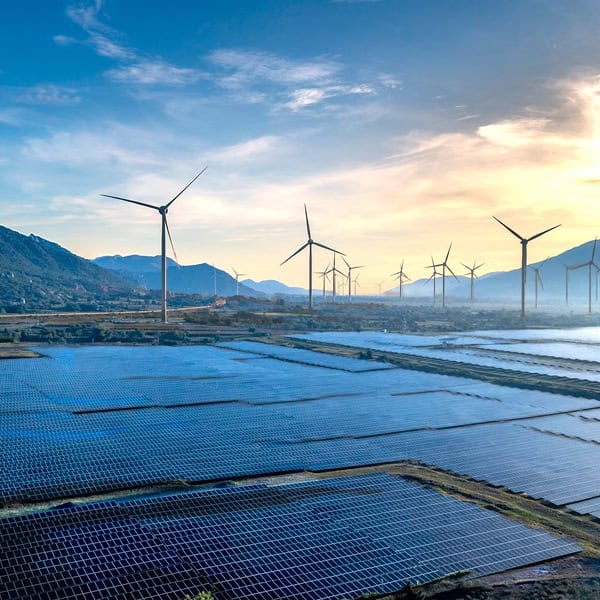
Supply is changing at a comparable pace. Renewables are projected to overtake coal as the largest source of generation by late 2025 or early 2026, and to account for more than 90 percent of demand growth across the forecast period. Renewable generation is expected to rise by around 60 percent, from 9,900 TWh in 2024 to 16,200 TWh by 2030, with solar responsible for more than half of that increase.
The direction of all this is settled. What is not settled, for most organizations, is whether the infrastructure can be built, modernized, and operated quickly enough to match the pace of change around it. That gap, between intent and delivery, is the work undertaken with energy and utilities leaders.
Current Challenges: The Sector’s Biggest Constraint Is No Longer Strategy. It Is Delivery.
Most energy and utilities organizations already hold a strategy for the transition. What remains in doubt is whether they possess the operating model, the governance, and the delivery capability to carry that strategy out at the required pace and scale. The plans are rarely the weak point. The capacity to execute them is.
Grid infrastructure is aging faster than it is being replaced
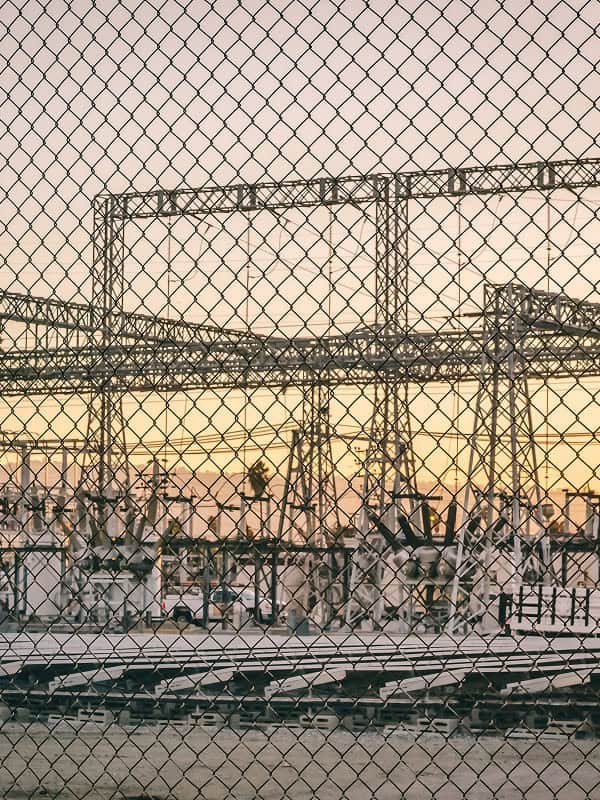
The backbone of most electricity systems was built for an energy mix and a pattern of demand that no longer exist. Power was assumed to flow in one direction, from large central plants out to consumers whose use was steady and predictable. What must now be carried is close to the reverse. Power moves in both directions as households and businesses generate their own, demand varies with electric vehicles and heat pumps, and variable renewables rise and fall with the weather in ways the system was never designed to absorb.
By 2030, variable renewables are expected to supply almost 30 percent of the world’s electricity, twice the present share. The strain is already evident. Curtailment is rising in markets from China and Germany to Brazil, Chile, the United Kingdom, and Ireland, and the hours in which electricity prices fall below zero have multiplied, concentrated around the middle of the day when solar output is highest. Each of these is a symptom of the same condition: a system that cannot yet flex quickly enough to match supply to demand, and one that grid modernization must correct.
Transmission, meanwhile, is being built more slowly than the generation and load it is intended to connect. Permitting and licensing have constrained wind in particular, and in 2024, wind grew at its slowest annual rate in two decades despite strong project pipelines held in the connection queue. The constraint here is neither capital nor technology. It is the capacity to deliver.
Operational resilience has become an explicit requirement, not an aspiration
As the system is electrified and made more interconnected, and as more of it comes to run on digital controls, the cost of a failure rises accordingly.
Every smart meter and cloud-based control platform that improves the system also widens the surface available to an attacker, so resilience and digitalization advance in step. Regulators have recognized this, and their expectations are moving in a single direction. Utilities are increasingly required to demonstrate that critical operations can withstand a disruption, recover on a predictable timeline, and continue to meet their obligations under stress. What was once a commitment in a strategy document is being converted into a requirement with consequences attached.
Capital program delivery is under pressure from several directions at once
The investment required to modernize the grid, connect new generation, and build the storage on which the system depends is considerable, and clean-energy investment now runs consistently ahead of expenditure on fossil fuels.
Raising the capital, however, was never the key challenge. The difficulty lies in deploying it well—on schedule, within the regulatory framework, and without unsettling the operations on which customers and regulators depend while the work proceeds around them.
Long project cycles, complex procurement, and stretched supply chains compound the difficulty, as does the fact that most of this work must be carried out while the existing system continues to run.
The organizations that manage it tend to share certain characteristics: governance that holds, a clear sense of sequence, and an operating model designed to run several programs concurrently rather than one after another.
Affordability and political visibility are rising together
When electricity prices rise, political and regulatory pressure follows, and it bears directly on the operating environment.
Wholesale prices across the European Union and the United States rose 30 to 40 percent in the first half of 2025 against the same months in 2024. Balancing the investment the transition demands against the cost imposed on customers is among the more difficult judgements the sector faces in the years immediately ahead, and it is seldom resolved by the engineering alone.
Trends and Insights: Digital Tools Are Moving From Pilots Into Core Operations
The transition is not solely a matter of physical infrastructure. It is equally a matter of how the organization is run. The utilities that are advancing are not those simply adding generation; they are those rebuilding the manner in which the network is operated, so that the additional complexity can be managed.
Digital tools are being moved out of the pilot stage and into operations
Research by PwC and Strategy& on digital maturity in the sector identifies a consistent pattern: the most advanced utilities have moved beyond pilots and integrated these tools into daily operation. Analytics, automation, and AI are improving how assets are managed and maintained, how outages are detected and resolved, and how the time of field crews is used. The value is no longer a projection. It is registered in shorter outages, better asset utilization, and lower running costs.
What impedes this is rarely the technology itself. Integration at scale requires a data architecture that links operational and enterprise systems, governance that permits decisions to be made more quickly, and personnel in the field and the control room capable of using the tools. Most utilities are further advanced in deploying the technology than in being prepared, as organizations, to absorb it.
AI and data centres are opening a new investment cycle
Data centre construction is accelerating worldwide as demand for AI infrastructure grows, and in the United States, data centres and AI together are expected to hold annual electricity demand growth above two percent through 2026—a marked change in a market where consumption had been approximately flat for more than a decade. For utilities with capacity in the appropriate locations, this represents at once a planning challenge and a commercial opportunity.
Renewables are forcing a change in operating model, not just in assets
The growth of variable renewables alters how a system must be operated, not merely what it is operated on. Flexibility has become a daily operational requirement rather than an innovation project, and the tools that provide it have crossed the same threshold. The utilities furthest advanced no longer regard demand response, storage, and smart metering as additions to the existing model. They are regarded instead as the foundation of a new one.
Opportunities and Solutions: Grid Modernization, Digital Integration, and Disciplined Capital Execution
1. Modernize the grid and invest in transmission
The IEA’s Electricity 2026 analysis identifies grid investment as the foundation on which the entire transition depends. Without transmission and distribution able to carry power in both directions, take in distributed generation, and absorb the higher peaks that electrification brings, the renewable capacity being added delivers less than it should and the system grows less stable rather than more.
Modernization of this kind requires more than capital. It requires regulators, capital strategy teams, and the delivery organizations to be aligned behind the same measures of reliability, affordability, and resilience. And it requires the work to be sequenced so that the investments most critical to the stability of the system are made first, and so that the resolution of one bottleneck does not quietly produce another.
2. Speed up interconnection and bring planning together
In most large markets, the queue of projects awaiting connection to the grid is among the tightest constraints on the deployment of renewables. Shortening it requires changes to the way planning is conducted and the way the rules operate, together with greater capacity within transmission operators to assess and clear applications more quickly and in greater volume. An organization able to influence those processes, and possessed of the internal governance to act as soon as an approval is granted, holds a material advantage in delivery.
3. Make better use of flexibility
Storage, demand response, and smart metering have become operational tools rather than optional extras, and the IEA’s Renewables 2025 analysis names flexibility as a first-order requirement as the share of variable renewables climbs. A utility that develops genuine capability in the management of flexibility, across the technology, the operations, and the relationship with the customer, will be better placed to contain costs, maintain reliability, and meet regulatory requirements as the system continues to change.
4. Execute digital work with discipline
The risk in digital transformation for this sector is not insufficient investment. It is the commitment of excessive resource to technology without the accompanying changes in operating model and governance that would allow it to deliver a return.
The strongest organizations proceed in the opposite manner. A smaller set of digital capabilities is developed more deeply, integrated into core operations rather than maintained as parallel initiatives, and supported by the data and decision-making foundations that allow the investment to continue returning value over time.
Conclusion: The Organizations Most Likely to Win Will Translate Transition Plans Into Delivered Infrastructure
Energy and utilities are moving toward an operating model that is more electrified, more decentralized, and more dependent on software than the model within which they developed. The demand growth is real, the investment need is established, and the direction in which the system is moving is not in question.
What remains in question, for most organizations, is how the transition is to be completed without sacrificing the reliability and affordability that customers and regulators expect while it is under way. That is the delivery problem, and it is the point at which execution capability ceases to be a phrase and begins to determine outcomes.
The organizations that create lasting value will be those in which capital strategy is aligned with the capacity to deliver, in which digital tools are brought into real operations rather than confined to the margins, and in which service is held steady while the system is reorganized around it.
How mBolden Works with Energy and Utilities Leaders
We work with senior leaders in regulated energy and utilities organizations on the operating model and governance side of transformation—the structures, decision systems, and change approaches that decide whether large capital and digital programs deliver what they were meant to.
Our work in the sector includes operating model design for utilities running capital and digital programs at the same time, governance and decision-right frameworks for complex multi-year initiatives, and change strategy for organizations rethinking how their field, operational, and enterprise teams work together.
Engagements are typically project-based, ranging from four to twelve weeks, with optional ongoing advisory support.
Frequently Asked Questions
Why do energy and utilities transformations stall even when the strategy is clear?
The plans are rarely the weak point. The capacity to execute them is. Most utilities already hold a transition strategy, and the breakdown happens where the operating model, the governance, and the delivery capability cannot support the implementation of the strategy at the pace and scale the moment requires. Capital and ambition are abundant. What is scarce is the organizational machinery to convert either into delivered infrastructure.
Why is grid modernization the constraint that decides the rest of the transition?
What is the difference between deploying digital tools and changing the operating model?
Deploying tools is a procurement and implementation exercise. Changing the operating model means redesigning how the data flows, who holds the decision rights, and how the work is governed, so that the tools can actually move into operations rather than sit in a pilot. Most utilities are further advanced in deploying technology than in being prepared, as organizations, to absorb it, and that gap is where most of the unrealized value sits.
How should utilities think about AI and data-centre demand?
Treat it as both a planning challenge and a commercial opportunity, and prepare for both at once. Data centres and AI are expected to keep U.S. electricity demand growth above two percent through 2026, a marked change in a market that had been roughly flat for over a decade, and for utilities with capacity in the right locations that is a meaningful position to hold. The planning work is to forecast and serve the load. The commercial work is to design the propositions and contracts that turn it into durable revenue.
Where should a utility leadership team focus its digital investment?
Develop a smaller set of digital capabilities more deeply, integrate them into core operations rather than maintain them as parallel initiatives, and put in the data and decision-making foundations that let the investment keep returning value. The risk in digital transformation for this sector is not insufficient investment. It is committing excessive resource to technology without the accompanying changes in operating model and governance that would allow it to pay off.
How should utilities balance the cost of the transition against customer affordability?
Hold both objectives at once and recognise that one is rarely resolved by the engineering alone. Wholesale prices across the EU and the US rose 30 to 40 percent in the first half of 2025 against the same months in 2024, and political and regulatory pressure follows that movement directly. The judgement lies in sequencing investment so that the work most critical to system stability is delivered first, and so that the customer impact is staged rather than concentrated.
About the Author
Suzanne Knight, MBA, MA is the award-winning founder and CEO of mBolden, a global management consulting firm. She has advised more than 80 organizations across 14 countries on transformation, organization design, and execution, spanning Fortune 500 companies and governments.
A former Fortune 100 transformation executive, she now keynotes internationally on digital transformation, leadership, and leading through change, including a keynote on the discipline of using disruption to build capability rather than absorb it. She is a long-standing instructor at the Schulich School of Business Executive Education.
Her work centres on the thesis: transformation typically succeeds or fails through execution, and the quality of the strategy cannot overcome ineffective delivery.

Sources and References
- International Energy Agency. (2025). Electricity 2025: Executive Summary.
- International Energy Agency. (2025). Global Energy Review 2025: Electricity.
- International Energy Agency. (2025). Renewables 2025: Renewable Electricity.
- International Energy Agency. (2025). Renewables 2025: Executive Summary.
- International Energy Agency. (2026). Grids: Electricity 2026 Analysis.
- International Energy Agency. (2025). World Energy Investment 2025: Executive Summary.
- International Energy Agency. (2025). World Energy Outlook 2025: Overview and Key Findings.
- Strategy& / PwC. Digital Business Maturity in the Energy Sector.
- Deloitte Insights. (2026). 2026 Power and Utilities Industry Outlook.
- U.S. Department of Energy. Electric Grids.